Honouring Funmilayo Ransome-Kuti 125 years since her birth
Meet the Nigerian suffragist who broke barriers by deposing a king and becoming her country's first female to drive a car.
| Emma Ajayi |
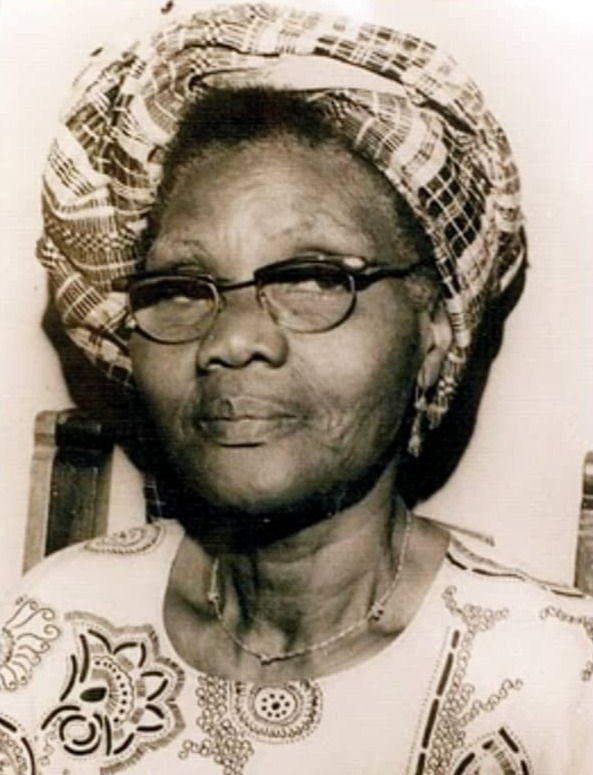
They say, 'behind every successful man, there is a woman.' For legendary Afrobeat musician Fela Kuti, that 'woman' was his mother, Funmilayo - who accomplished a few successes of her own.
Born at the turn of a new century, on October 25th 1900, a young Funmilayo Ransome-Kuti would one day assert herself as a feminist powerhouse who persevered through a time where she faced opposition from both patriarchal and colonial forces.
Initially known as Funmilayo Thomas, daughter of Daniel Thomas and Lucretia Adeosolu, Kuti was born in Abeokuta, the capital city of Nigeria's Ogun state. Coming from a state locally dubbed as the "gateway state," she herself would be the gateway to freedom for dozens of oppressed women in her community by founding a women's union in response to heavy taxes affecting the livelihoods of her fellow Egba citizens.
In 1932, she founded the Abeokuta Ladies Club (ALC), which began as an exclusive organization that served an audience of western-educated, upper class, Nigerian Christian women. By the early 1940s, the ALC later expanded to service the needs of working class women who sold produce as market vendors, thereby changing its name and purpose to the Abeokuta Women's Union (AWU). It later changed again in 1953, becoming known as the Federation of Nigerian Women's Societies.
Abeokuta has been home to the Egba people since the early 19th century. A subculture within the Yoruba tribe that Kuti and her family belonged to. In pre-colonial times, the Egba had their own system of governance which oversaw an 'Oba' or 'Alake' (king) at the top who acted as a figurehead, and a ruling body known as the 'Ogboni,' exercising legislative, judicial and executive power. Although Egba women were partially permitted into the Ogboni, they had both economic and political power, working as traders, and in administrative and decision-making roles exclusively reserved for women.
The situation for Nigerian women under colonial rule, was one that called for action from Funmilayo and women like her. Direct taxes were imposed in 1917 on the Yoruba-dominated Southern protectorate upon British Governor Fredrick Lugard's request. These controversial taxes led to the 1918 Adubi War, a massacre where thousands lost their lives. Women in Abeokuta were heavily impacted by the direct taxation in addition to the exploitative sanitary fines used as a source of revenue for authoritative figures. Failure to pay often escalated to physical abuse. Again, when Nigeria held its first general election in 1923, these taxpaying women were not given the right to vote in this groundbreaking moment for the nation.
When the British came to Nigeria, the Egba successfully managed to achieve autonomy from British rule under the Egba United Government. However, once the British became more determined to exercise authority throughout the whole nation, mounting pressure from the British-controlled Lagos government and a subsequent military conflict, ultimately ended their independence. Abeokuta was absorbed into the Southern Nigerian protectorate in 1914, when Funmilayo was a teen.
After their autonomy ended, the Egba United Government was reorganized and renamed as the 'Sole Native Authority' (SNA). This was how the British established indirect rule over the region. Under this new authority, Alake Ademola II would soon be made president, and the new form of government now included representatives that upheld British interests. Since women were excluded within colonial government, this meant that traditional customs previously allowing them to hold political and economic power, were mostly revoked.
Alake Ademola II ascended to the throne in 1920 after the death of his predecessor, Alake Gbadebo. Ademola II was notoriously known for abusing his position as SNA president and king. Under his reign, women were rarely consulted and there was strict enforcement of food and price controls which largely affected the women at the marketplace who couldn't afford it. There were also rumours of his sexual advances towards women. For Funmilayo and her band of female unionists, his abdication was paramount in meeting their goals.
Mrs. Kuti was a woman with achievements that were firsts of their kind. Starting at the age of 14, she became the first female student to attend Abeokuta Grammar School. A move backed by her parents, who believed education was important for both boys and girls. It was here that she met her highschool sweetheart and later husband, Israel Ransome-Kuti, whom she married in 1925, and shared her four children with, including Grammy Hall of Fame artist, Fela Kuti.
Completing her secondary education, Kuti studied abroad in England from 1919 to 1923. Here, she attended Wincham Hall School for Girls before returning to her home city Abeokuta where she briefly taught at her alma mater and continued her career as an educator.
Returning home from England, she again made history as the first woman to both own and drive a car in Nigeria, a taboo act for woman at the time, as the activity was primarily associated with men. The historic act was done with a second-hand car she owned and used to carpool women for the protest rallies against the imposed taxes. Besides being the first woman to ride a car nationwide, she extended her feminism beyond Nigerian borders by becoming Nigeria's first woman to belong to an international women's organisation.
The Nigerian activist's fierce commitment against injustice, particularly in the AWU, earned her the title "Lioness of Lisabi." "Lisabi" or "Lisabi land" is an alternative name for the land of Abeokuta. It honors the heroic Chief Lisabi who led the Egba to victory during a raid from the neighboring Oyo kingdom in precolonial times.
Before it was a union, the ALC accomplished drafting resolutions for social welfare among women, such as the provision of healthcare facilities, and financial aid for adult education. Their advocacy also accomplished the elimination of rice control.
Under the AWU, the women were more radical in their approach. Kuti and the AWU fought for women's rights by striving for the cultural, political and economic freedom of women. This entailed demanding suffrage, engaging in the struggle of taxed market women whose possessions were taken without compensation. Other actions involved liaising with like-minded organizations who also sought political and economic freedom, appealing to the press, filing complaints about the reigning Alake, and publicly criticizing him and the SNA through abusive chants during rallies held on palace premises.
In the end, faced with intense pressure spurred by the protests of adamant AWU members, Alake Ademola II abdicated the throne at the beginning of 1949. The resilience of these revolutionists lessened women's taxes, and achieved their goal of giving women political power when a handful of women were appointed into the Egba Central Council, which took over the SNA.
Besides her participation in the AWU, the "Lioness of Lisabi" was an anti-colonial nationalist that immersed herself into Nigerian politics. A founding member of the National Council of Nigeria and the Cameroons (NCNC), her and her party fought against the proposal for a new constitution that was essentially a continuation of the "divide-and-conquer" colonial strategy. She was also the only female representative that attended the Western Regional Conference in 1949 regarding a new constitution, and the only female contestant for the NCNC that passed the initial stage of candidacy.
Like other progressive female icons, Funmilayo Ransome Kuti faced her own setbacks. During Nigeria's 1954 federal election, Kuti stood alone as the only female candidate to run in the election, coming out unsuccessful. When she ran again four years later in 1949, her own party, the NCNC, did not endorse her. Although she made it abroad to England, she was denied entry into the US, as her socialist approach for equality had her labelled as a communist. As for the Alake whom she dethroned together with the women of the AWU, he was later reinstated - although she refused to recognize his authority as king.
Additionally, her nationalist stance and criticism of the Nigerian government in the newly independent Nigeria, besieged by a series of military coups, costed her life, as she was thrown down from the second floor of her residence by law enforcement in 1977. Hospitalized for months, Funmilayo died aged 77 the following year, as a result of sustained injuries caused by the fall.
Funmilayo's inspirational life story was turned into a biopic last year. Directed by Bolanle Austen-Peters and starring Kehinde Bankole. After Nigeria's independence in 1960, Funmilayo Ransome-Kuti's plight for the nation and her hometown women was officially recognized when she earned the Order of the Niger prize in 1965. Over a century since birth, her life echoes the importance of female contributions to society.
Post a comment