‘Bring back our Kebbi girls’: A decade since Chibok, Nigerians appeal to the media again in the latest terrorist attack.
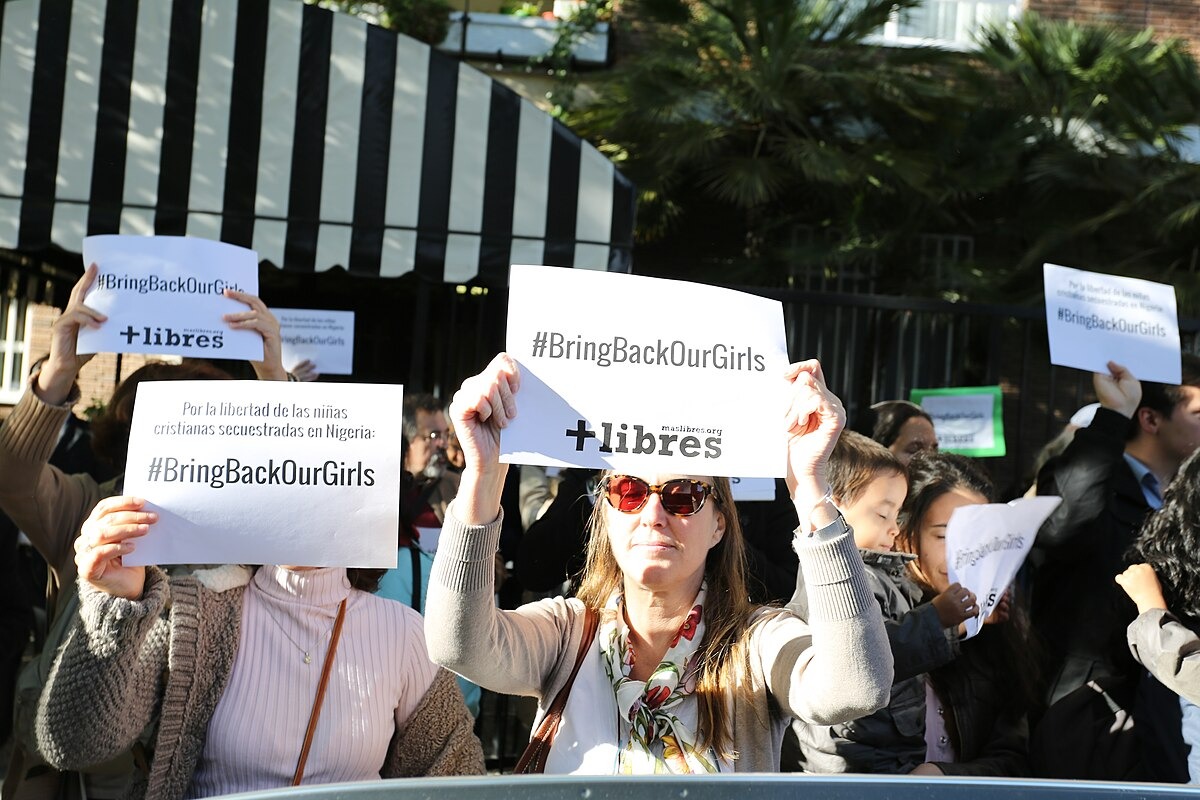
Recent schoolgirl kidnappings reminiscent of the #bringbackourgirls incident that happened in the Nigerian town of Chibok years prior, has sparked another social media hashtag along with the reuse of the former.
| Emma Ajayi |
On Monday, 25 schoolgirls
were taken
hostage during a Kebbi state kidnapping in North-Western Nigeria, where their vice-principal was
killed.
Since their abduction, two schoolgirls have reportedly escaped, leaving 23 still in captivity.
The incident occurred at 4 am yesterday morning in Maga town, when armed kidnappers attacked the Government Girls Comprehensive Secondary School by barging into the dormitories where the girls were found. Vice-principle Hassan Makuku was fatally shot while trying to defend himself and the students from the raid.
The widow of the deceased Makuku, an eye-witness, confirmed the gunmen were wearing camouflaged attire and speaking Fulani. A language spoken among members of the Fulani tribe situated in Northern Nigeria.
The news comes a year after the 10th anniversary of the Chibok kidnapping, a similar incident where other schoolgirls from Northern Nigeria were also abducted.
In April 2014, 276 schoolgirls from the arid Chibok town were taken hostage by the Boko Haram terrorist group. This mass kidnapping sparked online attention through the "Bring back our girls" hashtag on Twitter which received international attention from notable figures like former US first lady, Michelle Obama. Prompted by this widespread trending criticism, the terrorists gradually began to return the schoolgirls in batches. Yet not all girls were returnees.
As of 2025, the status and whereabouts of these remaining Chibok women stay unknown to their loved ones and the Nigerian public. In the face of this decade-long mystery and the most current kidnapping, the national cry still stands: "Bring back our girls." Except in Chibok they are not girls anymore. Today, they would be women.
Hours after Monday's kidnapping, Lieutenant General Waidi Shaibu, Nigeria's Chief of Army Staff, charged troops with the mission of locating the missing Kebbi schoolgirls and returning them home.
In an operation titled, "FANSAN YANMA," these troops were commanded to "intensify efforts" with "intelligence-driven operations" according to an official statement from the Nigerian army.
“Together, we will restore peace and ensure children can attend school safely,” he stated.
Several Nigerian social media users have taken online to express their grievances at the news under the hashtag, “Bring back our Kebbi girls” or its alternate, "Bring back Kebbi girls," while others draw parallels with the Chibok incident using the original hashtag, "Bring back our girls."
One social media user posted on X saying:
"Where are the #BringBackOurGirls advocacy groups? Why have you all gone mute? When Goodluck Jonathan was in office, all of you were carrying placards & chasing clout. Come out with your placards."
Another commented saying: "Senator Bola Tinubu @officialABAT, bring back Kebbi girls #BringBackOurGirls #BringBackKebbiGirls"
The Kebbi school kidnapping has also attracted international attention from figures like US congressman, Riley Moore, who expressed his concern in a tweet this afternoon:
"Please join me in praying for the 25 girls who have been kidnapped and for the repose of the soul of their vice principal who was killed."
"The Nigerian government must do more to end the rampant violence." He added.
Recent international focus on Nigeria’s terrorist attacks comes shortly after Donald Trump’s posts on the Truth Social platform this month, where he designated Nigeria as a country “of particular concern” among his claim of Christians facing an “existential threat” in response to the terrorist killings happening north of the country.
In his posts, Trump threatened to invade the West African nation, and terminate US aid on behalf of the "Christian population."
Though some Nigerians shared his sentiment, pleading for US intervention, others questioned the motive behind his post.
Some believe American interests in Nigerian oil reserves was the reason behind the post, whereas others believe the sudden interest in Nigerian affairs was intended as a distraction from the unreleased Epstein files.
Nigerian President, Bola Ahmed Tinubu, responded to Trump's confrontation in an official statement where he mentioned:
"The characterisation of Nigeria as religiously intolerant does not reflect our national reality, nor does it take into consideration the consistent and sincere efforts of the government to safeguard freedom of religion and beliefs for all Nigerians."
"Our administration is committed to working with the United States government and the international community to deepen understanding and cooperation on protection of communities of all faiths." He concluded.
As people continue expressing their thoughts on this developing case, it remains yet to be seen whether social media mobilization and international attention from these new hashtags will yield in the rescue of the Kebbi girls the way it did for Chibok victims.
“We must find these children. Act
decisively and professionally on all intelligence." General Waidi
Shaibu affirms. "Success is not optional.”
Post a comment