African governments need more female representation - without dictatorship scares
OPINION
Are politically empowered women capable of making desired changes on the continent? Or would we again fall into old habits repeated by our male counterparts?
| Emma Ajayi |
When Ellen Johnson Sirleaf broke the glass ceiling in 2005, headlines following election results declared her as Liberia's first female president. This monumental appointment as head of state wasn't merely a victory enclosed within Liberian borders, but the whole of Africa, which also witnessed its first ever female leader among the political histories of all 54 sovereign states.
Sirleaf, a well-accomplished Harvard alum, would go on to win the Noble Peace Prize for her dedication towards engaging women in peacekeeping duties. She is also credited for arranging negotiations that helped Liberia clear off 4.6 billion dollars worth of foreign debt, as well as her effective crisis management during the Ebola outbreak. Stepping down in 2018 after serving for 12 years, she lies among 93 women worldwide, and in Africa, among 11 female politicians that have claimed their countries' highest office. The latter record has made headlines recently – unfortunately, for a different reason: a case where the legacy of female empowerment has been abandoned and replaced with terror.
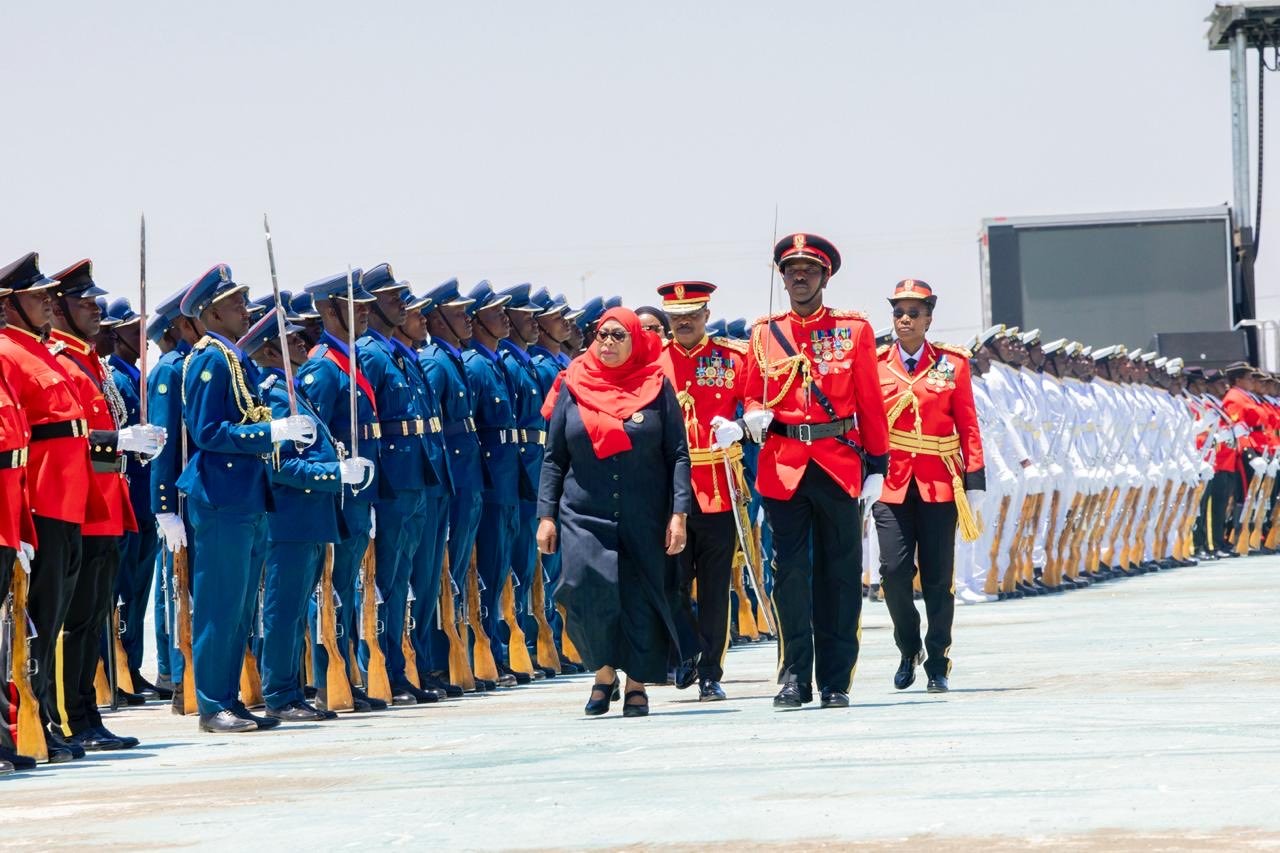
Since the release of Tanzania's disputed election result on the 1st of November, their first female president has pledged an investigation into the lives lost from riots that ensued. Official reports have confirmed more than 150 arrests were made during those protests, though the exact number of missing people and deaths remains yet to be verified. Human rights groups like Amnesty International estimate casualties to be more than 100, whereas projections from other human rights groups sharply contrast this figure, deeming it to be over 3,000.
The re-elected Samia Suluhu Hassan of Tanzania faced enormous backlash earlier this month after an overwhelming majority of the vote went to her party, the Chama Cha Mapinduzi (CCM). Last week Monday, Hassan took the stand to be officially sworn into the presidential office, days after the election was handed to her by a landslide. Her and her party claimed 98 percent of 32 million polled votes, leaving several members of the Tanzanian public in disbelief as they questioned the election's integrity. Public outrage at election figures amid reports of opposition leaders being targeted mounted into violent protests, producing graphic scenes of bloodshed. In the middle of the chaos, Tanzanian citizens reported inconveniences including a power outage and lack of internet connection, which were eventually restored.
Tanzania’s circumstance is not unprecedented. Rigged elections resulting in predetermined ascensions to power, or noticeable chunks of fiscal budgets performing 'disappearing acts,' and other symptoms of corrupt governance, have plagued African nations both in the past and present. From Mugabe in the South, to Abacha in the West, Amin in the East and Gaddafi up North, the trend of African democracies disrupted by dictatorships is a universal experience across the continent. The Chama Cha Mapinduzi has held power since 1961, the same year Tanzania gained independence. Translating to the "Party of Revolution," this revolutionary party has dominated Tanzania's political scene for more than half a century, essentially turning the nation into a one-party state. Nonetheless, disregarding past instances with authoritarian tactics and correspondence with the Chinese Communist Party, the CCM has opted for progressive policies, such as increasing the political participation of women like President Hassan.
Good leadership may not be a gender-specific trait, but research suggests that having women as politicians can yield substantially positive results. In the US, female legislators tend to be the most successful in passing laws centering vulnerable groups and families. Other research has similarly shown that women are much more responsive in civil service, with reforms, gender equality and general living standards. Hassan herself was a prime example of this during her first term beginning in 2021.
The untimely death of former president John Magufuli, whom she served as vice president to, consequently brought her into the presidential office. Despite the unexpected rise to power, her presidential debut was characterized by decisive leadership during the pandemic, where she addressed regulation failures by finally implementing the long expected safety measures that Magufuli ignored. Hassan also lifted restrictions on press freedom and education established by the previous administration, and made diplomatic efforts to improve relations with neighboring governments.
The breakdown of these efforts comes from the fact that President Hassan represents a political party that’s ruled for over 50 years. The political culture within the party has complied with autocratic tendencies which Hassan has abided with. Before his passing, Magufuli was known for his increasingly autocratic tactics which involved abducting and arresting opposition leaders. This same incident has persisted under President Hassan's current regime. The only way for African women in power to be considered a win, is by being democratically elected and representing parties that are committed towards the sustainment of democratic principles. Ultimately, Africa would only thrive under women who are determined to bring about change – rather than aligning themselves with existing political structures that are harmful.
Gender equality is not just a feminist call for inclusivity. It is a 342 trillion dollar prospect with large potential to benefit the global economy, according to the UN. Women roughly make up half of the world's population, but majority aren't meeting their economic potential, leaving a huge vacuum of possible global revenue. African women make up a bit less than 10% of the global population and are a particularly disadvantaged demographic. They face a variety of obstacles ranging from child marriage to femicide. However, if more African women were empowered to enter the workforce and into the governments that make the decisions influencing the workforce, we could see over 21 trillion dollars stashed into African economies and used to help fund infrastructure-related development. This estimated figure exceeds Africa's total GDP by seven times, which currently stands at 2.8 trillion.
Empowered women can positively impact the economy, but different systematic issues obstruct the entry of many African women into the rooms where political decisions are made. One of the most pressing systematic issues is either the failure to sign the legal age of consent into law or the poor execution of it. This profoundly hinders girls by reaping school drop-outs perpetuated by child marriages. A systemic failure that inherently keeps men in power. Some governments, such as the Zimbabwean, Ugandan and Sudanese governments, require education as a requirement for candidate eligibility. Additionally, records show a positive link between education and increased political ambition. As the UN reports, Sub-Saharan schoolgirls are less likely to complete their secondary education as opposed to fellow male students, thus impeding any political aspiration they may have in such countries.
10 years ago, the African Union vowed to meet goals that service the continent's women by 2025, as outlined in the Africa Agenda 2063. The agenda aims towards an Africa with free healthcare among other privileges by year 2063. One interim goal for this year was to see the end of "all harmful social norms and customary practices," yet 63% of genital mutilation cases happen on the African continent. Just over a month left in the year to go, many goals continue to remain hopes. If Africa’s political leaders truly engage in making a difference for their women, African women in return, would greatly help in facilitating development. For example, over 1,000 jobs were created in Djibouti because of Finima Mohamed's 'Plant Tree Plant Hope' foundation. Investing in entrepreneurial skills from more women would simultaneously empower them while helping to add jobs. Especially as Africa's burgeoning youth grapples with high unemployment rates.
Despite core challenges, African countries still demonstrate commitment towards female citizens. Close to a third of major political parties from all 54 countries have women's wings, where they lobby for gender-based policies and help recruit female voters. Tons of women have also contested for presidency or party nomination in Angola, Burkina Faso, Senegal and Kenya among others. Rwanda leads with only a few other countries worldwide that have successfully achieved gender parity in parliament. Ethiopia shortened the education gap between boys and girls, in addition to democratically electing a female president. In the late 90's, Tanzania was the first East African country to implement a 20% constitutional quota to improve women's political engagement. Other countries like Namibia, have also adopted constitutional and voluntary quotas to increase female constituents in local government, for example. In fact, African countries with the lowest representation of women are those without such designated quotas.
Though female empowerment remains a global issue, to move forward with female empowerment in Africa, other African countries should follow Rwanda's example. A country standing out globally with over 61% of its parliamentary seats occupied by women. Under this female-dominated governance, Rwanda is regarded as the safest, most technologically advanced country in Africa. To replicate this same progress in other African countries, 50% constitutional and voluntary quotas should be enforced with sanctions that increase their efficiency, as per official recommendations. Most African governments also need to prioritize electoral reforms that strengthen democratic values and ensure free and fair elections, giving female political aspirants a chance to begin with. Perhaps with such preliminary changes in place, we may someday see a promising future where African men can stand beside more women - not just as fellow leaders, but also as first gentlemen.
Post a comment